Bounties · Live · 2026
A bounty framework for hiring creatives, funding briefs, and paying the work.
I built Escape Bounty inside the live marketplace — projects, mood boards, entries, shortlists, job assignments, and Paystack escrow — and kept the rest of the product in working order: Escape Hub, the marketplace, EscapeMag, and the vendor, investor, manufacturer, and admin surfaces. Live app: escape-hq.com
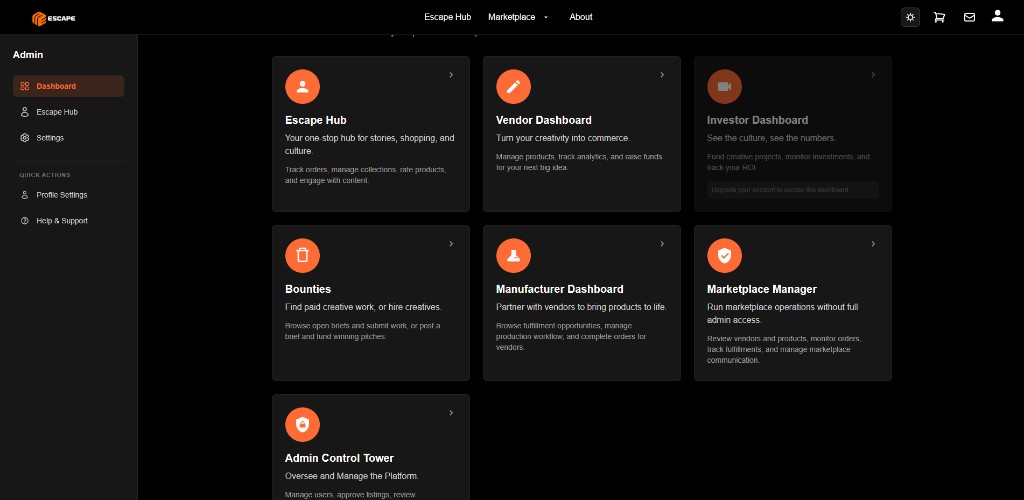
Admin
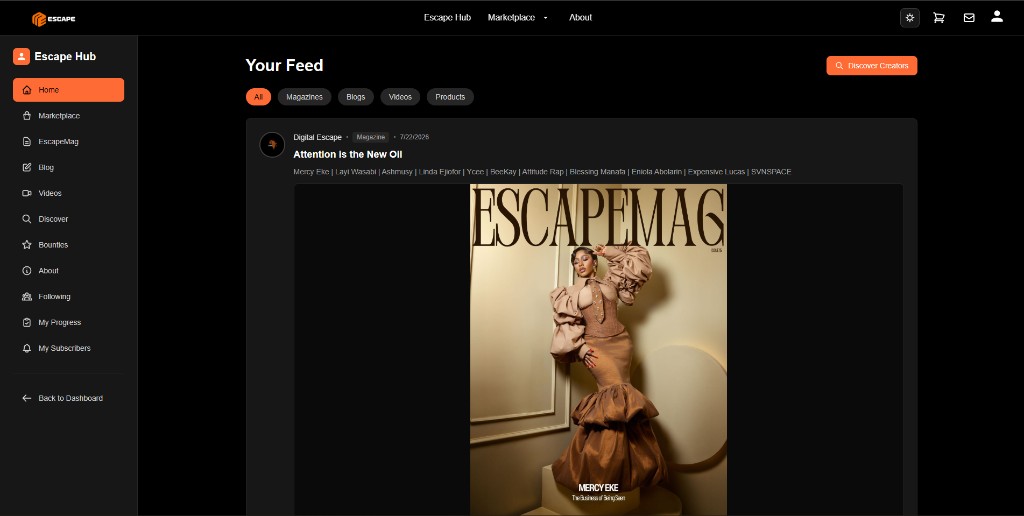
Escape Hub
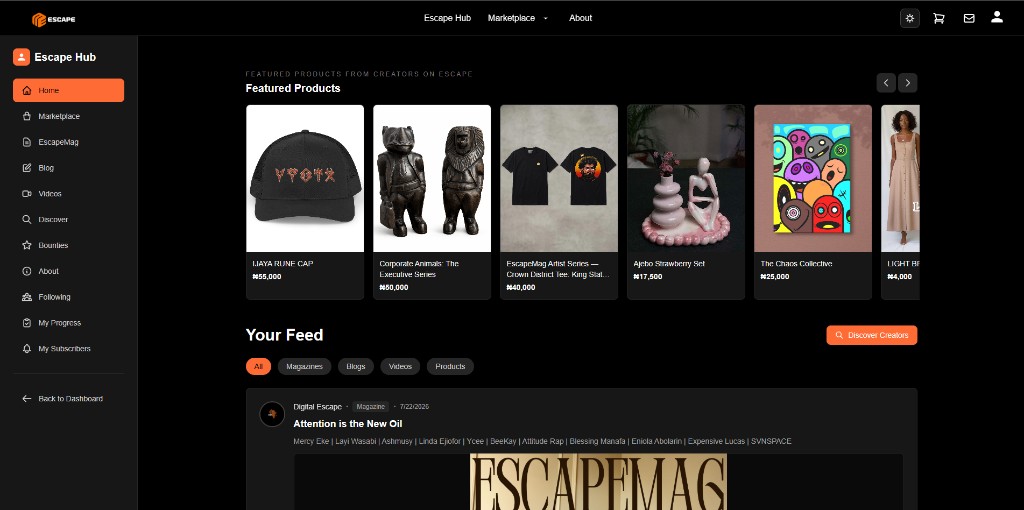
Marketplace
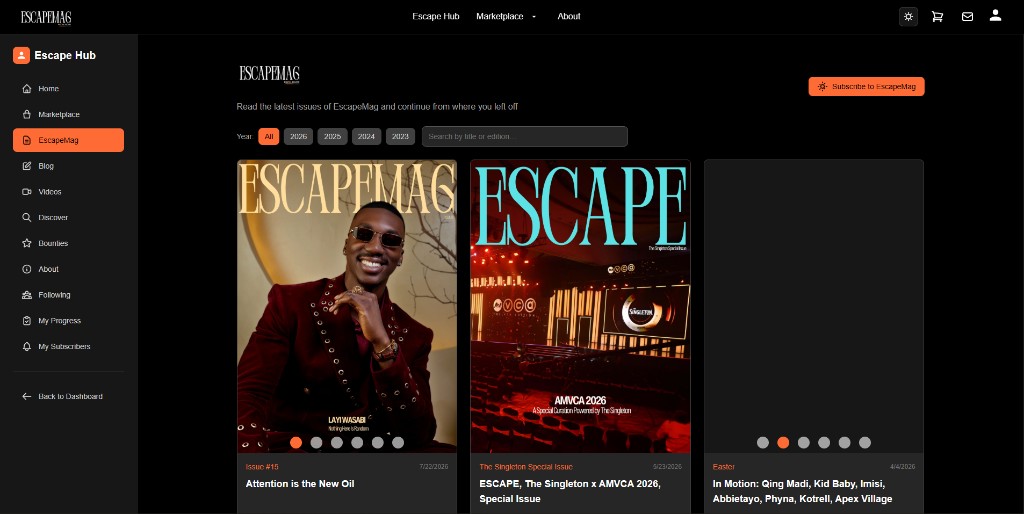
Product · Escape Bounty
Bounty is the loop between a hirer and a creative — post a brief, enter it, get shortlisted, then get paid from escrow.
Projects can be a single winner, several winners, role-based crews, or a grant. Creatives submit on a mood board, as a file, or as a link. Hirers view, shortlist, and select. Winners accept an assignment before the job moves into execution.
Money sits in escrow until release — full payout or milestone — with Paystack for automated funding and transfer. The same Next.js and Express app still runs Escape Hub, commerce, and EscapeMag around it.
The framework
Prisma models the whole loop — profiles, projects, roles, entries, submissions, assignments, escrow ledger, and notifications — so a brief cannot pay out before it is funded.
A hirer opens a draft, sets remote or physical, picks a budget tier, and chooses single-winner, multi-winner, role-based, or grant. The brief stays awaiting funds until escrow is marked funded, then opens.
Creatives enter, then submit a board, a file, or a link. Hirers mark work viewed, shortlist it, and select winners. Status runs from entered through submitted, viewed, shortlisted, and selected.
Funds move unfunded, funded, held, partially released, or released. Release is full or by milestone. Paystack can initialise and confirm escrow, then retry a failed payout.
A selected entry becomes an assignment the creative accepts, works, and completes. Payout status tracks bank details through paid or failed. XP, a leaderboard, and in-app notices sit on the same profile.
Visual language
Bounties sit beside Escape Hub, vendor, investor, and manufacturer desks. The orange mark stays the action colour across hub, magazine, and marketplace.
Primary actions use #FF6B35. Cards sit on charcoal. The rest of the shell stays black so magazine covers and product photos carry the colour.
Tool cards use a compact sans for names and a quieter line for the job. Section labels stay uppercase and tracked, the same rhythm as CAREER tools elsewhere in the hub.
The wider app
Bounty shipped inside a product that already had a hub, a magazine, a shop, and a blog. Those surfaces stayed live while the framework landed.
Implementation
Next.js on the front, Express and Prisma on the API, Postgres for the ledger, Redis beside it.
The bounty UI lives in the same App Router frontend as the hub and admin: sidebars, cover cropping, vendor payments, and pending role offers.
A dedicated bounty router covers public project lists, creative and brand dashboards, entries, selection, invites, and admin pause, resume, fund, and release.
Profiles, projects, roles, entries, submissions, assignments, milestones, and an escrow ledger are first-class models, with Redis for the wider app cache.
Manual fund and release sit next to flagged auto-escrow: initialise, confirm, retain a fee, release a milestone, refund, and retry a payout.
Escape HQ is the public home for the hub, magazine, and marketplace the bounty framework sits inside.